
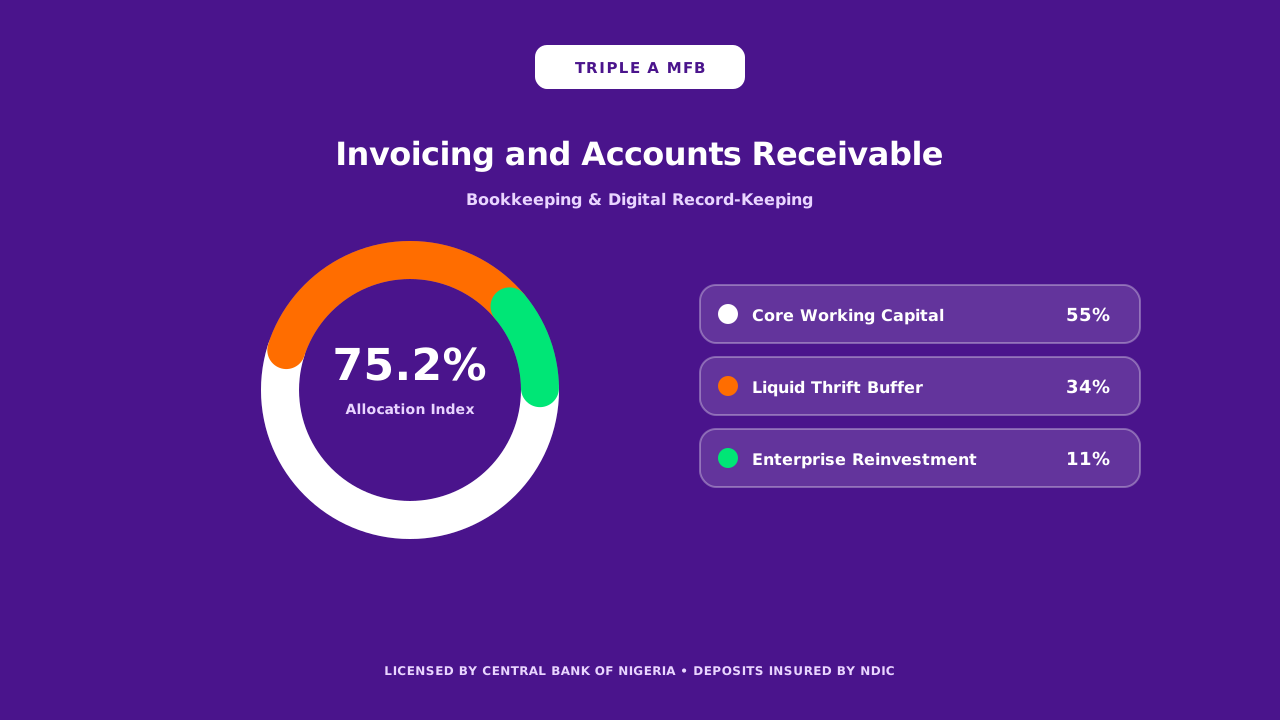
Financial Core: Accounts Receivable Debt Collection Principles
Mastering invoicing and accounts receivable: how to collect debts without ruining customer relationships directly impacts operating margins, inventory velocity, and net business profitability. When enterprises replace guesswork with disciplined ledger tracking and formal microfinance partnerships, capital leakage is curtailed and borrowable capacity expands exponentially.
The following analysis breaks down the key execution pillars from a practitioner perspective.
Key Tactical Takeaways
- Automating daily 5% revenue sweeps into yield-bearing savings vaults compounds enterprise liquidity reserves.
- Strict separation of personal living expenses from daily store revenues prevents hidden working capital insolvency.
- Calculating net gross margins per product SKU eliminates loss-making inventory lines from store shelves.
- Shortening cash conversion cycles below 14 days multiplies annual inventory velocity by up to 3.4 times.
Institutional Perspectives on Accounts Receivable Debt Collection
Financial authorities and development finance institutions have increasingly emphasized the necessity of structured financial governance at the grassroots level. As regulatory oversight tightens around identity verification and capital adequacy, businesses must adopt institutional compliance to preserve continuity.
Implementing verified accounts receivable debt collection protocols safeguards enterprise assets against regulatory disruptions, ensuring uninterrupted transaction processing across all digital banking channels.
"Microfinance is not merely about disbursing small loans; it is about building resilient financial infrastructure that protects informal traders from predatory lending cycles."
— Olayemi Cardoso, Governor, Central Bank of Nigeria (CBN)
5-Step Roadmap to Sustainable SME Scaling
Corporate Formalization
Register business name with CAC and open a dedicated corporate bank account.
Digital Bookkeeping
Track daily revenues, expenses, and gross margins using digital accounting tools.
Cash Flow Separation
Pay founder salary instead of drawing irregular cash from business float.
Credit History Building
Access small working capital loans and repay consistently to boost credit score.
Operational Framework: Implementing Accounts Receivable Debt Collection
In competitive retail and commercial markets, success relies on systematic execution rather than guesswork. Sustainable outcomes require balancing three foundational operational layers:
1. Liquidity & Cash Velocity
Accelerating cash conversion cycles ensures revenue is promptly reinvested into fast-moving inventory, minimizing idle funds and reducing borrowing dependencies.
2. Verification & Data Integrity
Maintaining clear digital audit trails and verified identity credentials prevents ledger discrepancies and positions the enterprise for tier escalations.
3. Risk Mitigation & Buffers
Establishing dedicated statutory contingency reserves shields operations against sudden price volatility, currency fluctuations, or supply chain bottlenecks.
Practical Implementation Protocols
To successfully integrate these principles into day-to-day operations, business owners and savers should execute the following four structured steps:
- Tier 3 Digital Harmonization: Link verified BVN, NIN, and utility records to eliminate balance limitations and guarantee zero transaction friction.
- Automated Revenue Allocation: Configure automatic 10% daily turnover sweeps into an insured interest-bearing savings vault.
- Credit Registry Management: Protect your Credit Bureau rating by consistently meeting repayment obligations before scheduled due dates.
- Dedicated Advisory Engagement: Consult with licensed microfinance credit officers to structure bespoke working capital facilities tailored to your inventory turnover.
Frequently Asked Questions on Accounts Receivable Debt Collection
Why is separating personal and business finances crucial for SME survival?
Commingling funds obscures actual profit margins and frequently leads to inadvertent spending of operating working capital, resulting in liquidity crises.
How does digital bookkeeping improve business loan eligibility?
Documented sales through digital banking apps and POS terminals provide credit officers with verifiable evidence of revenue consistency and repayment capacity.
What is the recommended size for an enterprise emergency reserve?
Retailers and commercial business owners should maintain between 30 to 60 days of fixed operating expenses in an accessible, yield-bearing savings vault.
Empower Your Business Today with Triple A MFB
Experience hassle-free banking, flexible SME loan facilities, and competitive savings yields with Triple A Microfinance Bank Limited.