
Executive Summary: Managing Seasonal Demand Spikes: Preparing Your Business for Festive Sales Surges
Effective management of seasonal demand sme financing provides commercial traders and business operators with a measurable competitive edge. Rather than navigating unpredictable informal debt cycles, adopting verified banking workflows establishes transparent cost structures and builds institutional creditworthiness.
This operational guide analyzes the underlying mechanics, regulatory standards, and practical frameworks required to maximize financial outcomes.
Key Tactical Takeaways
- Automating daily 5% revenue sweeps into yield-bearing savings vaults compounds enterprise liquidity reserves.
- Strict separation of personal living expenses from daily store revenues prevents hidden working capital insolvency.
- Building an emergency cash buffer equal to 45 days of fixed operating overhead shields retailers from supply shocks.
- Shortening cash conversion cycles below 14 days multiplies annual inventory velocity by up to 3.4 times.
Core Foundation Guide
This article is part of our comprehensive curriculum on Helping Small Businesses Grow (HSBG). For the complete strategic overview, read our pillar guide: Helping Small Businesses Grow (HSBG): The Master Blueprint for Sustainable SME Expansion.
Institutional Perspectives on Seasonal Demand Sme Financing
Financial authorities and development finance institutions have increasingly emphasized the necessity of structured financial governance at the grassroots level. As regulatory oversight tightens around identity verification and capital adequacy, businesses must adopt institutional compliance to preserve continuity.
Implementing verified seasonal demand sme financing protocols safeguards enterprise assets against regulatory disruptions, ensuring uninterrupted transaction processing across all digital banking channels.
"Small businesses that maintain disciplined daily cash flow separation and transparent bookkeeping are four times more likely to scale into mid-tier commercial enterprises."
— Babatunde Irukera, Consumer Protection & Enterprise Governance Consultant
5-Step Roadmap to Sustainable SME Scaling
Corporate Formalization
Register business name with CAC and open a dedicated corporate bank account.
Digital Bookkeeping
Track daily revenues, expenses, and gross margins using digital accounting tools.
Cash Flow Separation
Pay founder salary instead of drawing irregular cash from business float.
Credit History Building
Access small working capital loans and repay consistently to boost credit score.
Comparative Analysis: Informal Methods vs. Institutional Standards
Understanding the fundamental distinction between unverified informal practices and licensed microfinance mechanisms is essential for long-term wealth preservation:
| Operational Metric | Informal / Unregulated Approach | Licensed Microfinance Standard (Triple A MFB) |
|---|---|---|
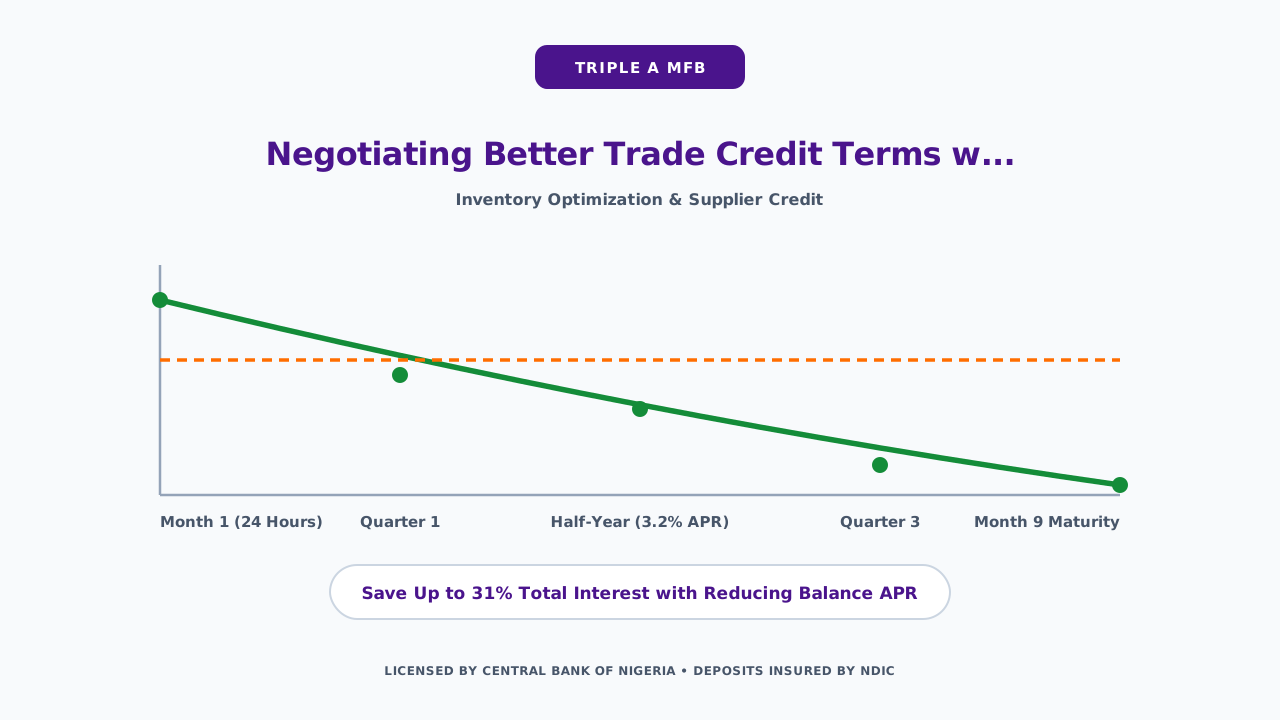
| Interest Computation | Flat rate calculations masking high effective APR | Transparent reducing-balance APR with clear amortizations |
| Depositor Protection | Zero insurance; complete capital loss risk | 100% insured by NDIC under Central Bank of Nigeria mandates |
| Credit Building | Invisible to national credit registries | Builds verified Credit Bureau (CRMS) rating for enterprise scaling |
| Transaction Security | Manual cash vulnerability & theft exposure | End-to-end encrypted digital transfers & instant settlements |
Recommended Best Practices for Sustainable Growth
Enterprise longevity requires embedding disciplined banking workflows across all daily transactions:
- Weekly Ledger Reconciliation: Cross-reference mobile app transaction histories with point-of-sale settlement summaries every weekend.
- Separation of Operating Reserves: Maintain strict partition between store inventory working capital and household living allowances.
- Fraud Prevention Hygiene: Safeguard account credentials, ensuring transaction OTPs and PINs remain strictly confidential.
- Tenor-Matched Financing: Avoid financing long-term physical equipment using high-interest ultra-short-term borrowing facilities.
Frequently Asked Questions on Seasonal Demand Sme Financing
Why is separating personal and business finances crucial for SME survival?
Commingling funds obscures actual profit margins and frequently leads to inadvertent spending of operating working capital, resulting in liquidity crises.
How does digital bookkeeping improve business loan eligibility?
Documented sales through digital banking apps and POS terminals provide credit officers with verifiable evidence of revenue consistency and repayment capacity.
What is the recommended size for an enterprise emergency reserve?
Retailers and commercial business owners should maintain between 30 to 60 days of fixed operating expenses in an accessible, yield-bearing savings vault.
Empower Your Business Today with Triple A MFB
Experience hassle-free banking, flexible SME loan facilities, and competitive savings yields with Triple A Microfinance Bank Limited.