
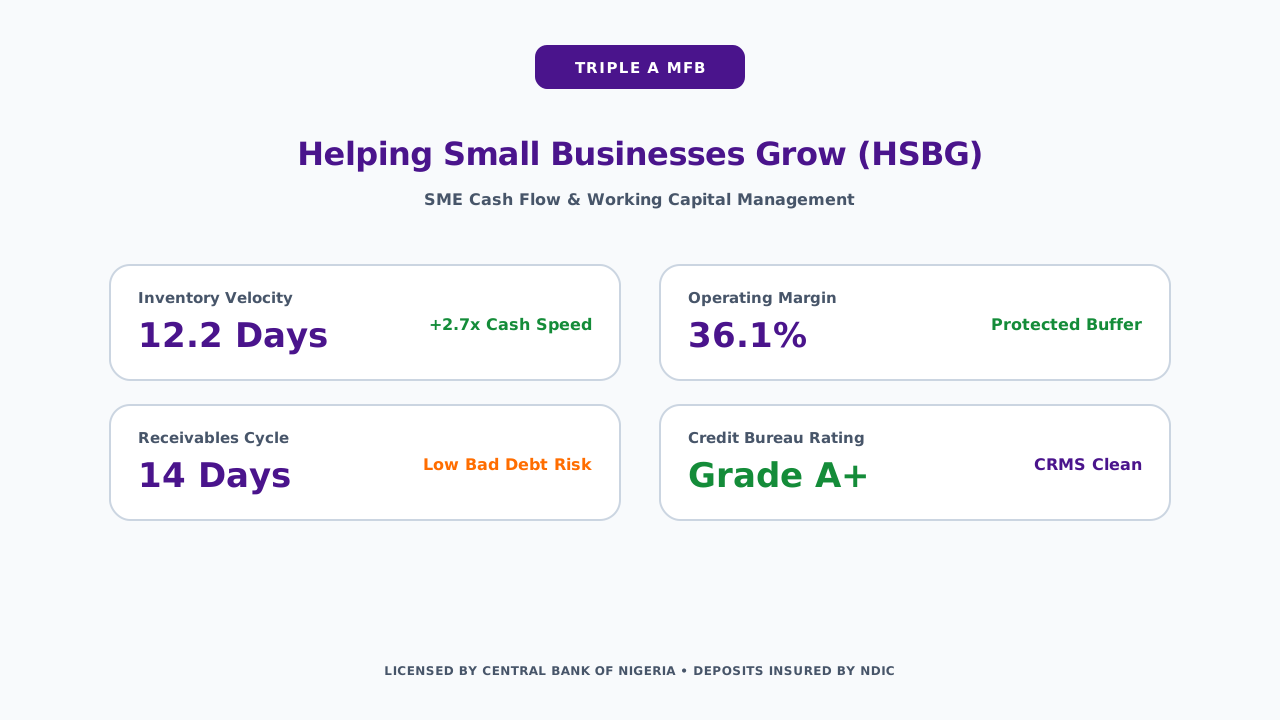
Executive Summary: Helping Small Businesses Grow (HSBG): The Master Blueprint for Sustainable SME Expansion
Effective management of helping small businesses grow hsbg provides commercial traders and business operators with a measurable competitive edge. Rather than navigating unpredictable informal debt cycles, adopting verified banking workflows establishes transparent cost structures and builds institutional creditworthiness.
This operational guide analyzes the underlying mechanics, regulatory standards, and practical frameworks required to maximize financial outcomes.
Key Tactical Takeaways
- Strict separation of personal living expenses from daily store revenues prevents hidden working capital insolvency.
- Building an emergency cash buffer equal to 45 days of fixed operating overhead shields retailers from supply shocks.
- Calculating net gross margins per product SKU eliminates loss-making inventory lines from store shelves.
- Maintaining digital sales records on mobile POS terminals establishes verifiable turnover for credit underwriting.
Operational Foundations: Moving Beyond Informal Practices
Micro-enterprises frequently operate on razor-thin cash margins where a single delayed receivables batch or unexpected emergency expense can disrupt the entire supply chain. Overcoming these vulnerabilities requires establishing systematic ledger discipline and maintaining dedicated contingency reserves.
By partnering with licensed microfinance institutions, commercial operators replace volatile coping mechanisms with structured, insured, and predictable banking products designed for long-term growth.
"Digital KYC and identity harmonization are the most effective levers to eliminate transaction fraud while expanding financial access to underserved communities."
— Dr. Amina Bello, Fintech Regulation & Microcredit Policy Specialist
5-Step Roadmap to Sustainable SME Scaling
Corporate Formalization
Register business name with CAC and open a dedicated corporate bank account.
Digital Bookkeeping
Track daily revenues, expenses, and gross margins using digital accounting tools.
Cash Flow Separation
Pay founder salary instead of drawing irregular cash from business float.
Credit History Building
Access small working capital loans and repay consistently to boost credit score.
Unit Economics & Working Capital Optimization
Sustainable growth requires a granular focus on cash conversion cycles, overhead containment, and statutory solvency standards:
Gross Margin Protection
Consistently evaluate cost of goods sold (COGS) against inflation-adjusted wholesale prices to maintain a minimum 25% operating buffer.
Receivables Discipline
Cap customer credit windows to a strict 7-day maximum, enforcing automated SMS payment reminders to prevent bad debt write-offs.
Liquidity Reserve Vaults
Maintain at least 15% of monthly operating revenue in dedicated high-yield fixed deposit accounts to capture institutional interest yield.
The 4-Stage Action Checklist for Operators
Deploy this practitioner checklist to harden operational efficiency and maximize bankability:
- Audit Cash Inflows: Map all revenue streams to identify and eliminate undocumented credit sales.
- Transition to Verified Channels: Direct all customer payments through digital bank transfers and mobile POS channels.
- Build an Operating Buffer: Accumulate a liquid reserve equivalent to 30 to 45 days of fixed operational overhead.
- Leverage Structured Credit: Utilize reducing-balance loans to fund bulk purchasing advantages during seasonal trade peaks.
Related Strategic Guides in This Series
Frequently Asked Questions on Helping Small Businesses Grow Hsbg
Why is separating personal and business finances crucial for SME survival?
Commingling funds obscures actual profit margins and frequently leads to inadvertent spending of operating working capital, resulting in liquidity crises.
How does digital bookkeeping improve business loan eligibility?
Documented sales through digital banking apps and POS terminals provide credit officers with verifiable evidence of revenue consistency and repayment capacity.
What is the recommended size for an enterprise emergency reserve?
Retailers and commercial business owners should maintain between 30 to 60 days of fixed operating expenses in an accessible, yield-bearing savings vault.
Ready to Transform Your Financial Future?
Open a Triple A Microfinance Bank personal or business account in less than 5 minutes. Enjoy seamless transfers, zero hidden charges, and fast access to SME growth credit.