
Executive Summary: The Credit Risk Management System (CRMS) and Its Impact on SME Loan Accessibility
Effective management of cbn crms microfinance provides commercial traders and business operators with a measurable competitive edge. Rather than navigating unpredictable informal debt cycles, adopting verified banking workflows establishes transparent cost structures and builds institutional creditworthiness.
This operational guide analyzes the underlying mechanics, regulatory standards, and practical frameworks required to maximize financial outcomes.
Key Tactical Takeaways
- Tier 1 to Tier 3 e-KYC compliance ensures frictionless high-volume transaction processing under CBN mandates.
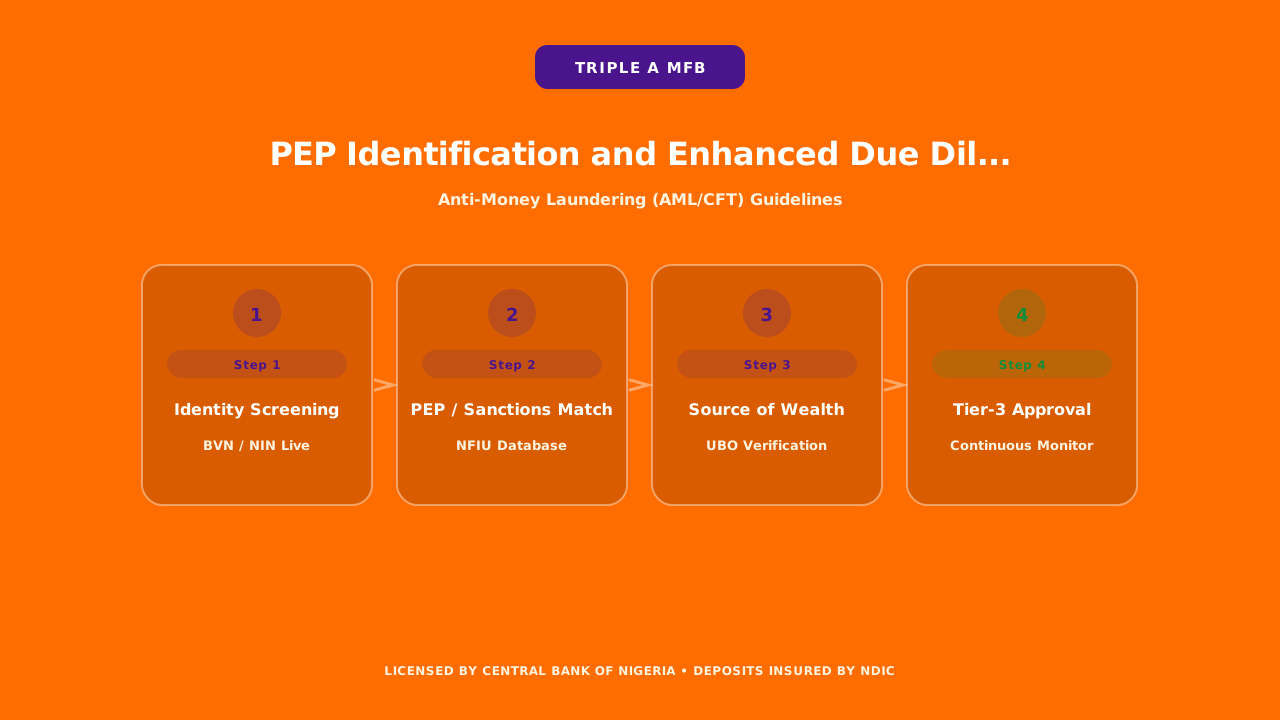
- Harmonizing BVN and NIN identity documentation eliminates account freezing and unauthorized transaction lockouts.
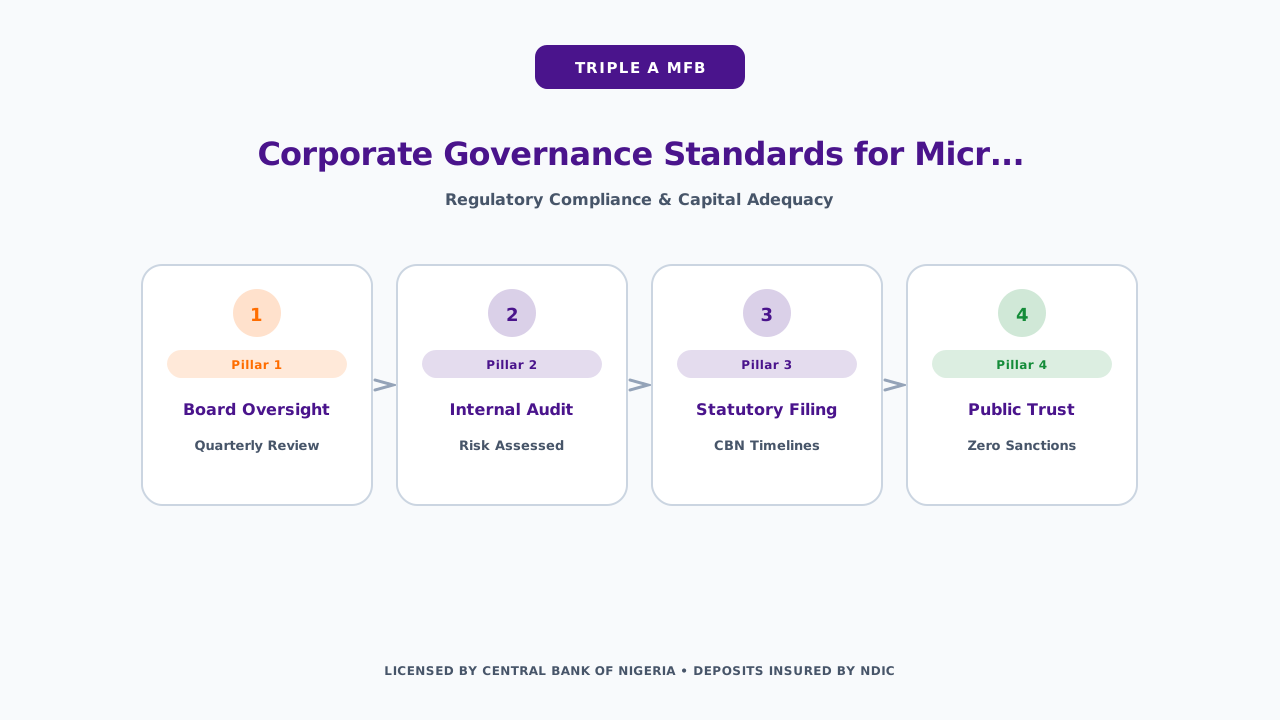
- Capital adequacy ratio (CAR) monitoring by the apex bank guarantees that licensed microfinance banks maintain deep liquidity buffers.
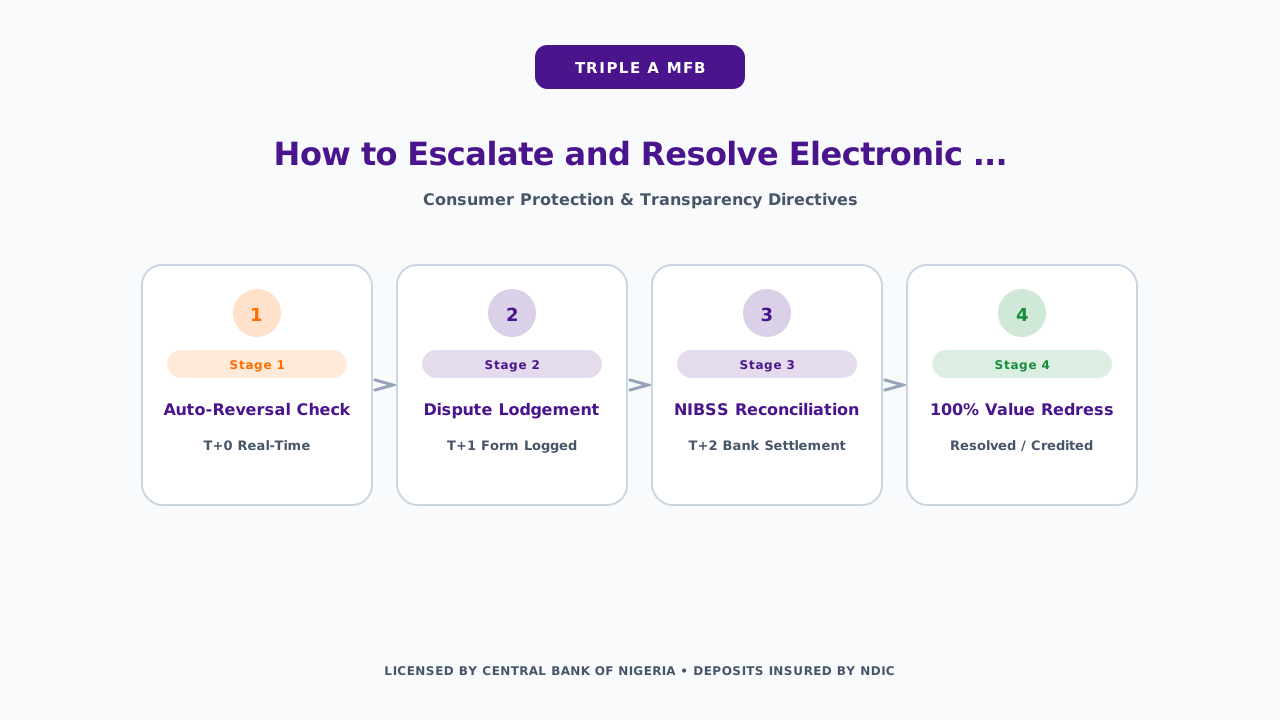
- Regular regulatory reporting ensures consumer protection standards are enforced across all customer touchpoints.
Core Foundation Guide
This article is part of our comprehensive curriculum on CBN Directives. For the complete strategic overview, read our pillar guide: Understanding Central Bank of Nigeria Directives: The 2026 MFB Regulatory Framework.
Market Dynamics & Structural Realities in Nigeria
The contemporary Nigerian economic environment presents both unprecedented opportunities and operational hurdles for micro-enterprises. Rapid digital payment adoption has lowered cash handling barriers, yet navigating inflationary cost pressures and currency fluctuations requires rigorous capital discipline.
Within the scope of regulatory compliance & capital adequacy, businesses that transition from informal cash handling to structured banking channels secure clear institutional advantages, including verifiable turnover histories and insulated working capital buffers.
"A robust deposit insurance system combined with rigorous capital adequacy supervision is the bedrock of public confidence in community banking."
— Bello Hassan, Managing Director & Chief Executive, Nigeria Deposit Insurance Corporation (NDIC)
Central Bank of Nigeria (CBN) Tiered KYC Limits
| Account Tier | Documentation Required | Daily Transaction Limit | Cumulative Balance Cap |
|---|---|---|---|
| Tier 1 (Basic) | Passport Photo, Name, Phone Number | ₦50,000 | ₦300,000 |
| Tier 2 (Standard) | Verified BVN, NIN, Basic Identity | ₦200,000 | ₦1,000,000 |
| Tier 3 (Full KYC) | BVN, NIN, Utility Bill, Valid ID | ₦5,000,000+ | Unlimited |
Step-by-Step Execution Blueprint for Cbn Crms Microfinance
To institutionalize best practices, enterprises must deploy a phased implementation sequence that minimizes operational disruption while maximizing compliance:
Phase 1: Baseline Audit
Evaluate current cash flow leakages, undocumented credit sales, and manual record inconsistencies across all daily trade channels.
Phase 2: Digital Transition
Migrate physical ledger records into verified mobile banking and POS transaction streams with full BVN/NIN validation.
Phase 3: Structured Optimization
Establish automated daily sweep accounts, negotiate reducing-balance credit terms, and conduct monthly gross margin reviews.
Recommended Best Practices for Sustainable Growth
Enterprise longevity requires embedding disciplined banking workflows across all daily transactions:
- Weekly Ledger Reconciliation: Cross-reference mobile app transaction histories with point-of-sale settlement summaries every weekend.
- Separation of Operating Reserves: Maintain strict partition between store inventory working capital and household living allowances.
- Fraud Prevention Hygiene: Safeguard account credentials, ensuring transaction OTPs and PINs remain strictly confidential.
- Tenor-Matched Financing: Avoid financing long-term physical equipment using high-interest ultra-short-term borrowing facilities.
Frequently Asked Questions on Cbn Crms Microfinance
Why is biometric BVN and NIN linking mandatory for all bank accounts?
Central Bank of Nigeria mandates universal BVN/NIN harmonization to protect account holders against identity theft, eliminate ghost accounts, and enforce anti-money laundering standards.
What protections does NDIC insurance offer to depositors?
The Nigeria Deposit Insurance Corporation (NDIC) guarantees depositor funds in licensed microfinance banks, ensuring that savings remain fully insured and protected by law.
How do account tiers affect daily transfer limits?
Tier 1 accounts accommodate basic entry-level transactions, while Tier 3 accounts with full identity and address verification provide unlimited balance capacity and maximum daily transfer thresholds.
Empower Your Business Today with Triple A MFB
Experience hassle-free banking, flexible SME loan facilities, and competitive savings yields with Triple A Microfinance Bank Limited.