
Strategic Overview: Aml Cft Compliance Microfinance
In the evolving landscape of Nigerian commerce, aml cft compliance microfinance serves as a critical driver of enterprise liquidity and financial stability. For micro-enterprises, retail merchants, and structured households, moving beyond informal cash arrangements toward verified microfinance infrastructure eliminates systemic operational friction.
Achieving sustainable economic resilience requires understanding the intersection of transparent credit pricing, disciplined capital allocation, and statutory regulatory protections.
Key Tactical Takeaways
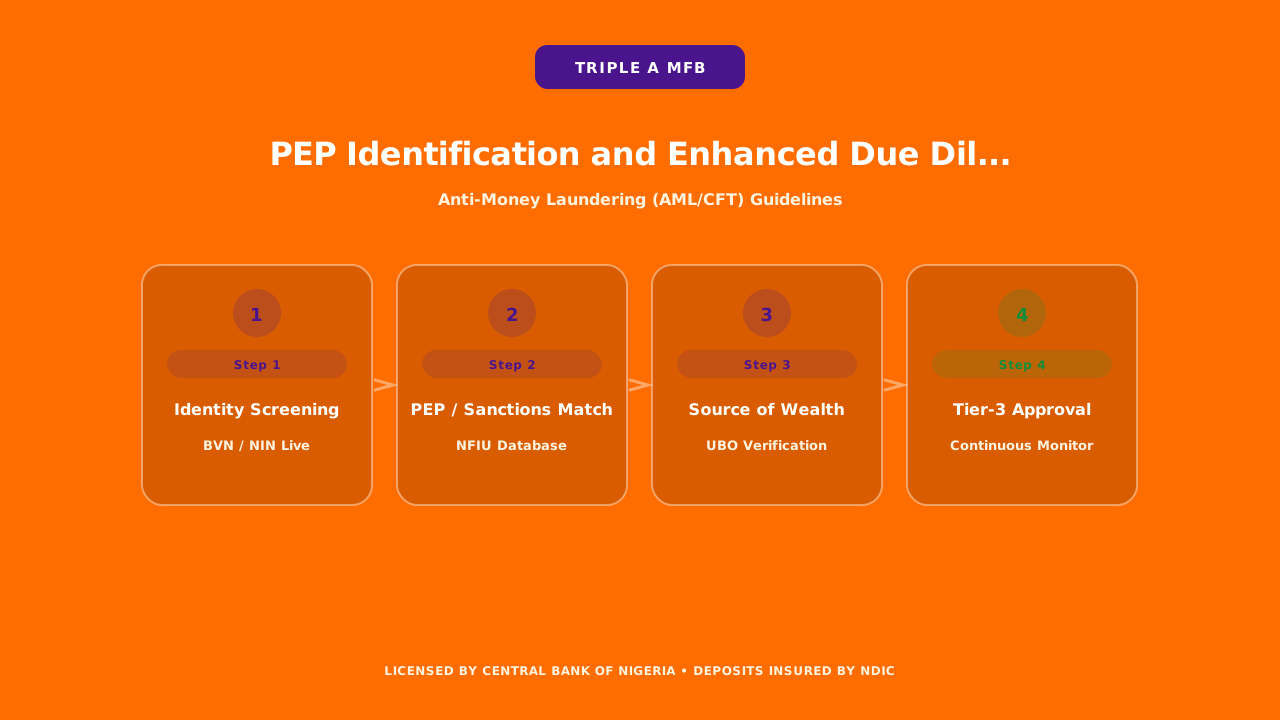
- Strict adherence to Anti-Money Laundering (AML/CFT) frameworks protects grassroots merchants from regulatory fines.
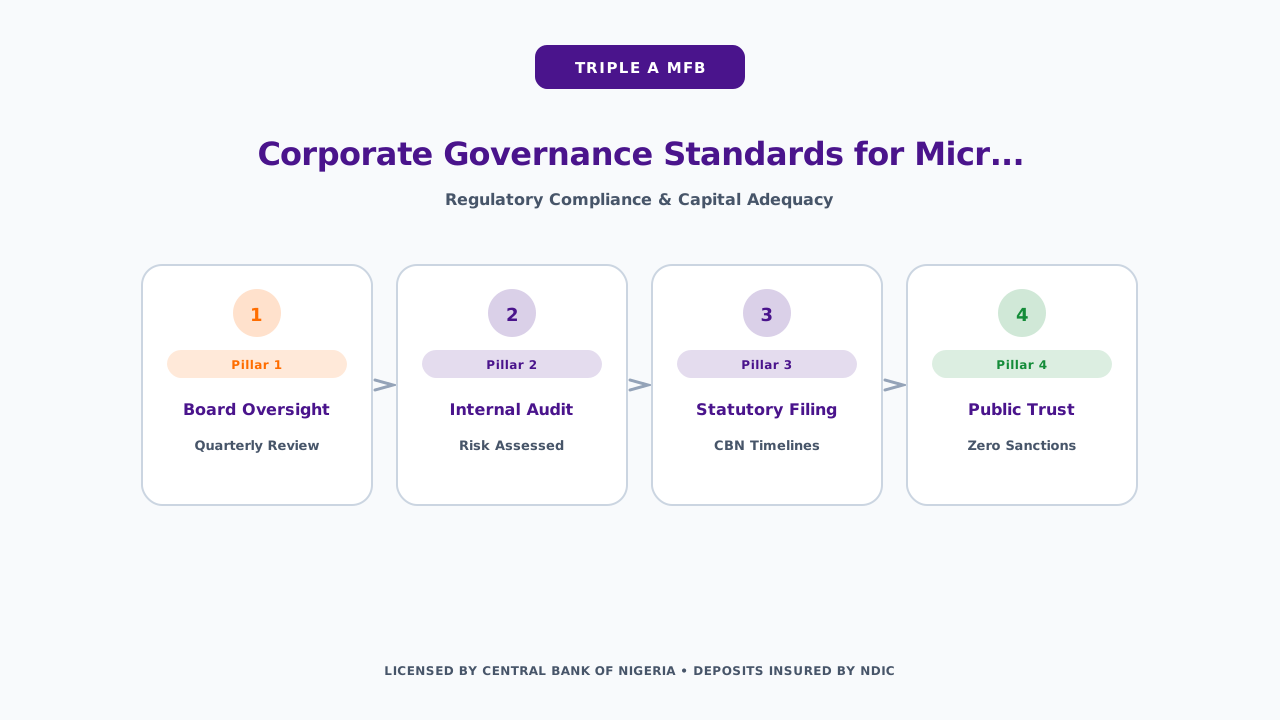
- Capital adequacy ratio (CAR) monitoring by the apex bank guarantees that licensed microfinance banks maintain deep liquidity buffers.
- Harmonizing BVN and NIN identity documentation eliminates account freezing and unauthorized transaction lockouts.
- Tier 1 to Tier 3 e-KYC compliance ensures frictionless high-volume transaction processing under CBN mandates.
The Economic Imperative: Why Aml Cft Compliance Microfinance Matters
For growing enterprises across key commercial hubs in Nigeria, access to structured, transparent banking infrastructure is the difference between stagnation and scalable growth. Informal credit networks and unrecorded cash transactions expose business founders to unpredictable capital drains.
Aligning operational workflows with licensed microfinance standards ensures that every naira generated actively contributes toward building creditworthiness, operational resilience, and long-term solvency.
"Sustainable economic development in emerging markets starts with grassroots financial access. When micro-enterprises have access to dependable credit and savings buffers, community wealth multiplies exponentially."
— Ugbeda Preacher, Head of IT & Admin, Triple A Microfinance Bank Limited
Central Bank of Nigeria (CBN) Tiered KYC Limits
| Account Tier | Documentation Required | Daily Transaction Limit | Cumulative Balance Cap |
|---|---|---|---|
| Tier 1 (Basic) | Passport Photo, Name, Phone Number | ₦50,000 | ₦300,000 |
| Tier 2 (Standard) | Verified BVN, NIN, Basic Identity | ₦200,000 | ₦1,000,000 |
| Tier 3 (Full KYC) | BVN, NIN, Utility Bill, Valid ID | ₦5,000,000+ | Unlimited |
Step-by-Step Execution Blueprint for Aml Cft Compliance Microfinance
To institutionalize best practices, enterprises must deploy a phased implementation sequence that minimizes operational disruption while maximizing compliance:
Phase 1: Baseline Audit
Evaluate current cash flow leakages, undocumented credit sales, and manual record inconsistencies across all daily trade channels.
Phase 2: Digital Transition
Migrate physical ledger records into verified mobile banking and POS transaction streams with full BVN/NIN validation.
Phase 3: Structured Optimization
Establish automated daily sweep accounts, negotiate reducing-balance credit terms, and conduct monthly gross margin reviews.
The 4-Stage Action Checklist for Operators
Deploy this practitioner checklist to harden operational efficiency and maximize bankability:
- Audit Cash Inflows: Map all revenue streams to identify and eliminate undocumented credit sales.
- Transition to Verified Channels: Direct all customer payments through digital bank transfers and mobile POS channels.
- Build an Operating Buffer: Accumulate a liquid reserve equivalent to 30 to 45 days of fixed operational overhead.
- Leverage Structured Credit: Utilize reducing-balance loans to fund bulk purchasing advantages during seasonal trade peaks.
Frequently Asked Questions on Aml Cft Compliance Microfinance
Why is biometric BVN and NIN linking mandatory for all bank accounts?
Central Bank of Nigeria mandates universal BVN/NIN harmonization to protect account holders against identity theft, eliminate ghost accounts, and enforce anti-money laundering standards.
What protections does NDIC insurance offer to depositors?
The Nigeria Deposit Insurance Corporation (NDIC) guarantees depositor funds in licensed microfinance banks, ensuring that savings remain fully insured and protected by law.
How do account tiers affect daily transfer limits?
Tier 1 accounts accommodate basic entry-level transactions, while Tier 3 accounts with full identity and address verification provide unlimited balance capacity and maximum daily transfer thresholds.
Empower Your Business Today with Triple A MFB
Experience hassle-free banking, flexible SME loan facilities, and competitive savings yields with Triple A Microfinance Bank Limited.